Topenergy Product Insights | Solar Power Distribution & Electrical Equipment
As photovoltaic installations become an important part of commercial and industrial energy infrastructure, reliable electrical distribution, protection, and energy metering are essential considerations in solar project design.
Beyond solar panels and inverters, the AC distribution system plays an important role in connecting photovoltaic generation equipment to the designated electrical network.
The GGD PV Grid-Connected Metering Cabinet provides a configurable low-voltage electrical enclosure solution for integrating power distribution, circuit protection, and metering equipment in suitable solar PV applications.
Topenergy offers GGD-type electrical distribution cabinet solutions for customers requiring project-specific equipment configurations, including solar EPC contractors, system integrators, electrical engineering companies, and industrial project buyers.
In this article, we explore the functions, components, applications, and important selection considerations of GGD photovoltaic grid-connected metering cabinets.
A GGD PV Grid-Connected Metering Cabinet is a low-voltage electrical cabinet based on the GGD fixed-type distribution cabinet structure. It can be configured to accommodate the switching, circuit protection, electrical metering, and auxiliary equipment required by a photovoltaic AC distribution system.
In a typical grid-connected PV installation, solar modules generate direct current (DC) electricity. A photovoltaic inverter converts the DC electricity into alternating current (AC), which can then be connected to a designated AC distribution and metering arrangement before reaching the applicable electrical network.
The exact connection arrangement depends on the project's electrical design, utility interconnection requirements, and installed equipment.
A properly designed solar AC distribution cabinet helps integrate designated electrical functions into an organized enclosure, with equipment accessibility, electrical safety, and maintenance requirements considered during engineering.
Solar power installations require more than an inverter and a connection cable. Electrical distribution and monitoring arrangements must be designed to match the generation capacity, network characteristics, fault conditions, and site requirements.
A photovoltaic grid-connected cabinet can accommodate the designated switching and distribution equipment needed for connecting inverter outputs to the low-voltage electrical system.
Correct conductor sizing, switching arrangements, busbar design, and protective coordination are essential to the overall installation.
Appropriately selected circuit breakers and protective devices help address electrical faults and abnormal operating conditions within their rated capabilities.
Depending on the engineering design, a PV AC distribution and protection cabinet may incorporate main circuit breakers, feeder protective devices, surge protection equipment, and associated control components.
Energy measurement is an important consideration for photovoltaic system operation and performance evaluation.
A solar grid-connected metering cabinet can accommodate compatible multifunction power meters, current transformers, and energy metering devices.
Depending on the instruments selected, the metering system may provide measurements of voltage, current, active power, reactive power, power factor, frequency, and electrical energy.
Where utility or revenue metering is required, the selected meters and installation must satisfy the applicable accuracy and utility approval requirements.
Front-mounted measuring instruments and status indicators can help authorized personnel observe designated electrical parameters and equipment operating conditions.
Optional communication equipment may provide data access to a compatible monitoring system, subject to device compatibility and the final electrical configuration.
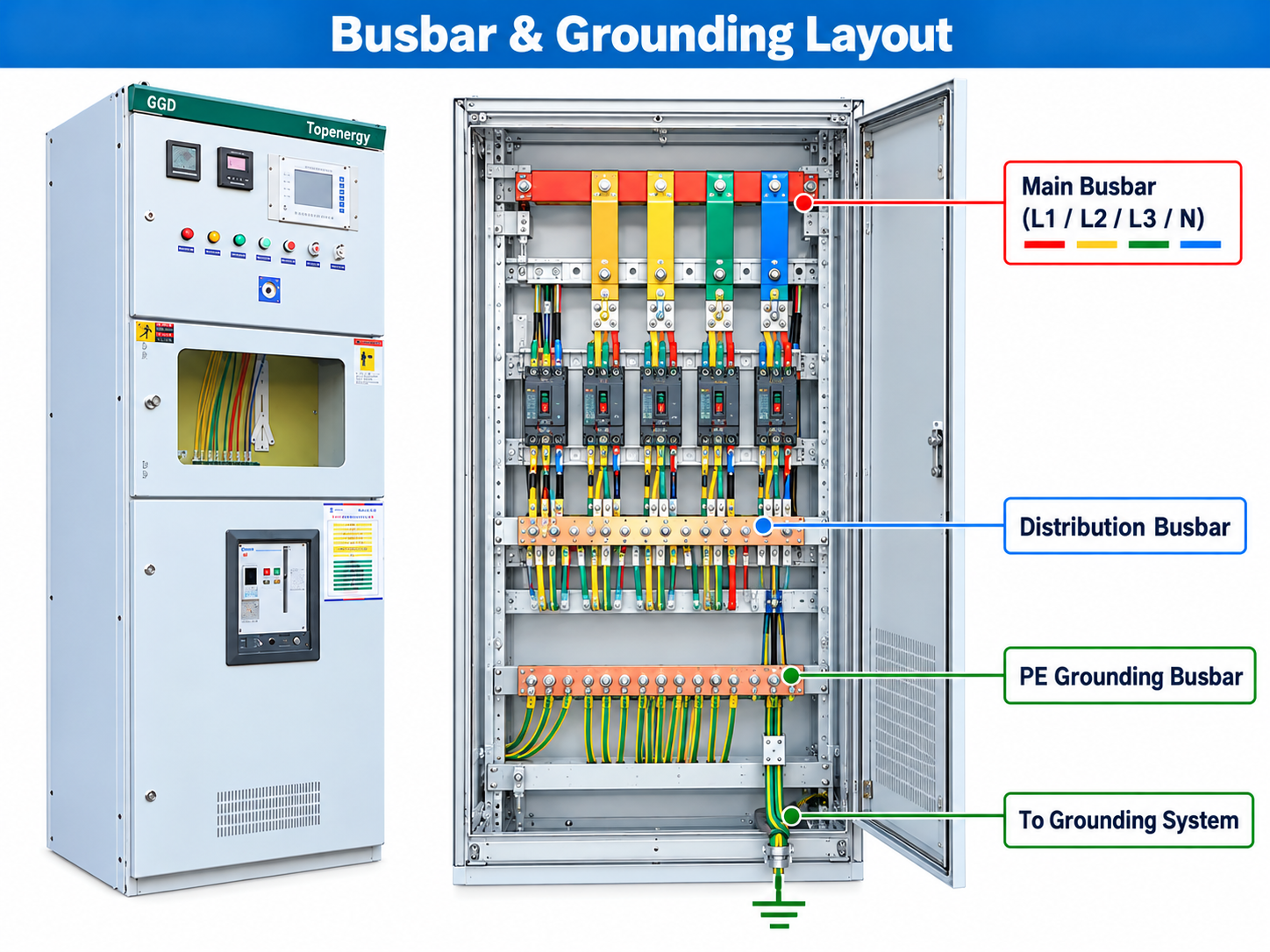
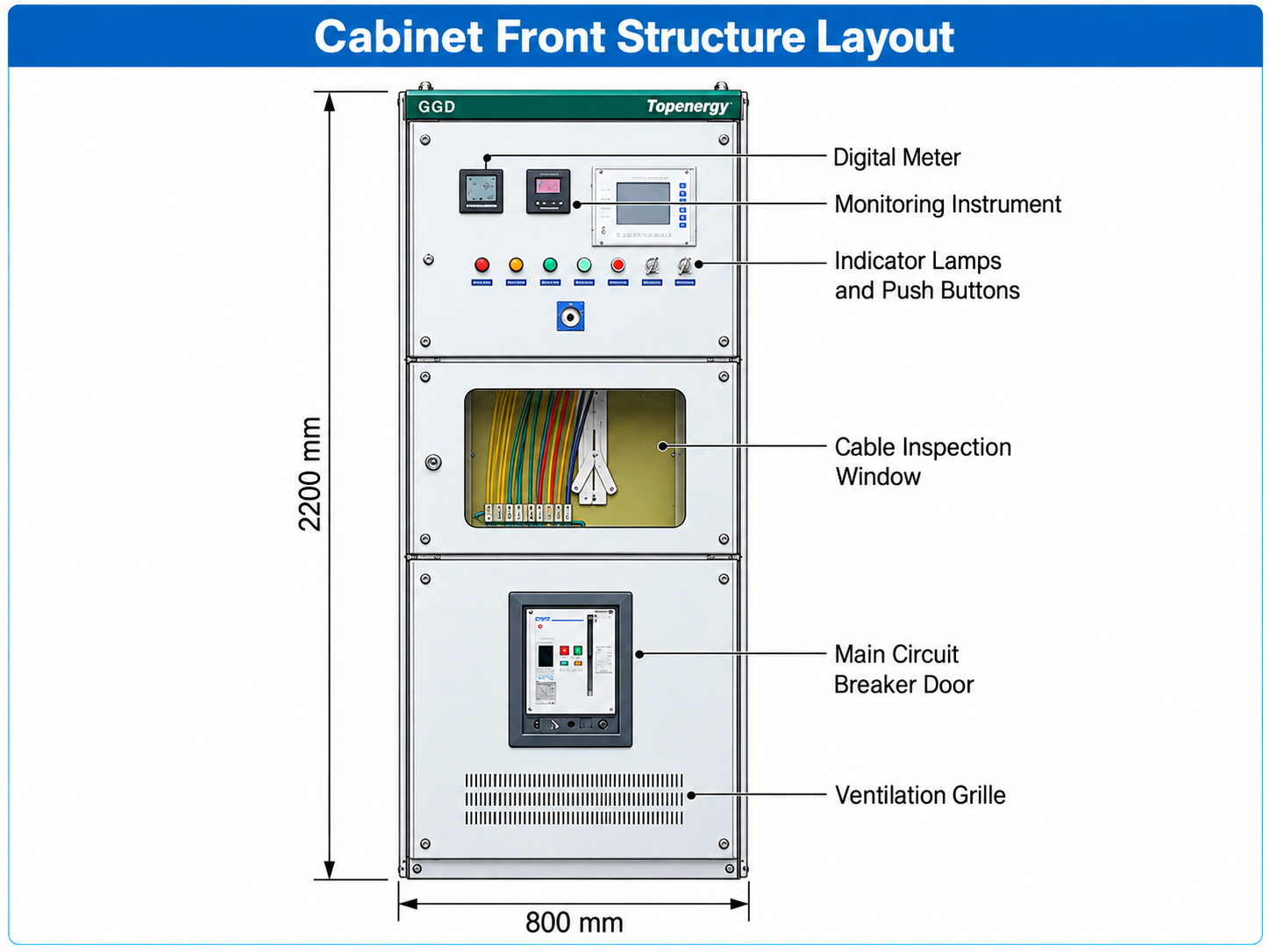
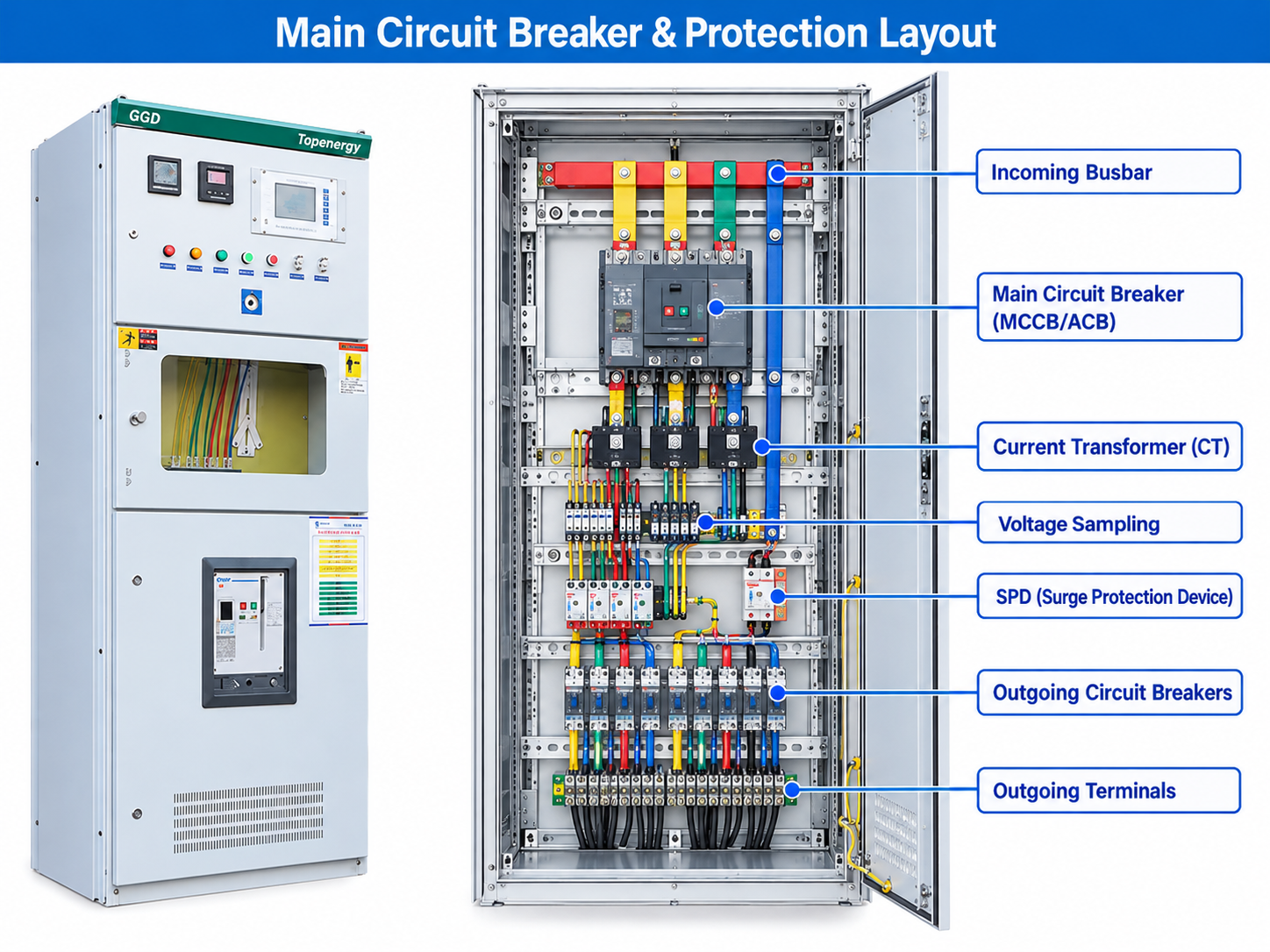
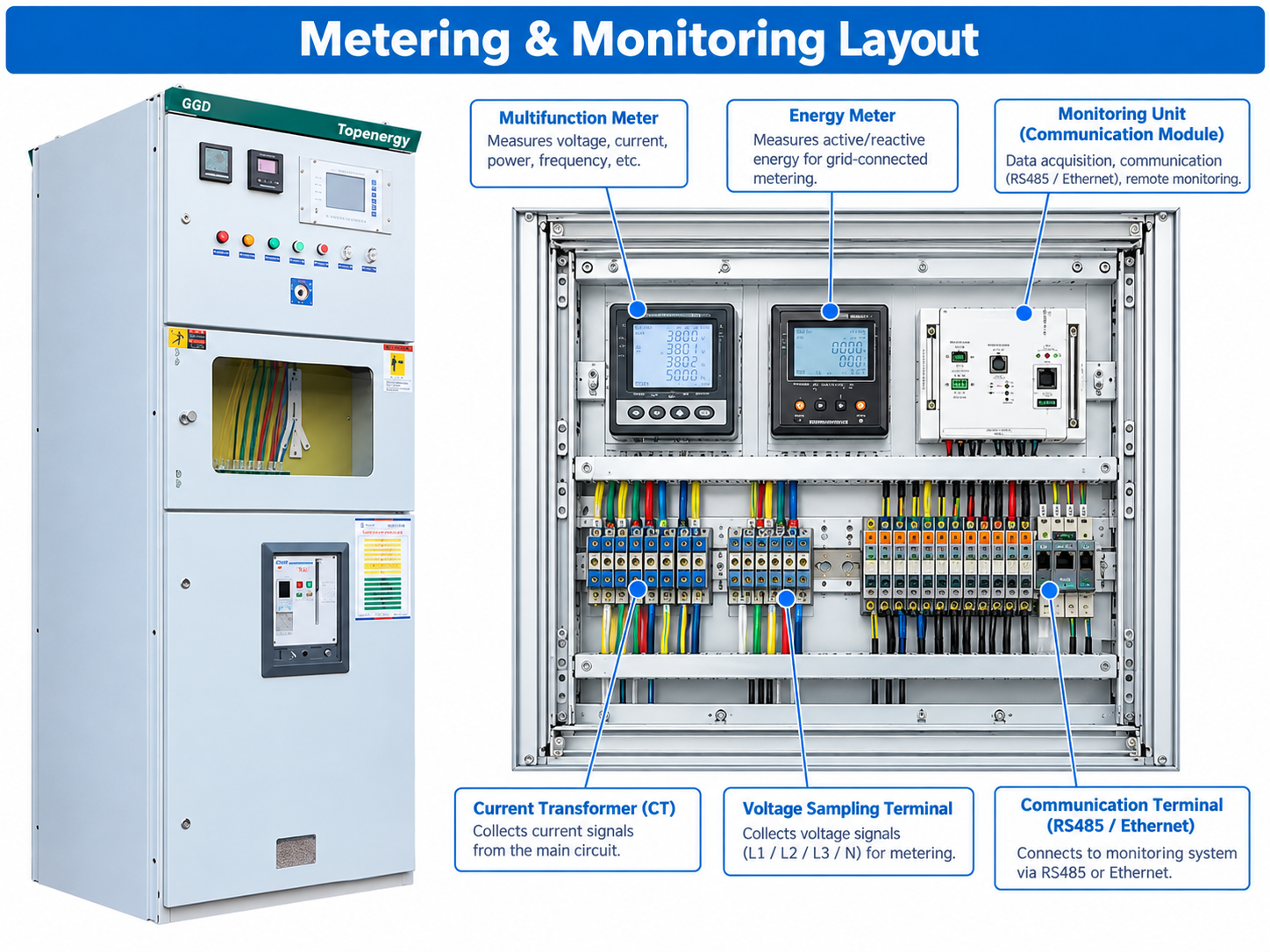
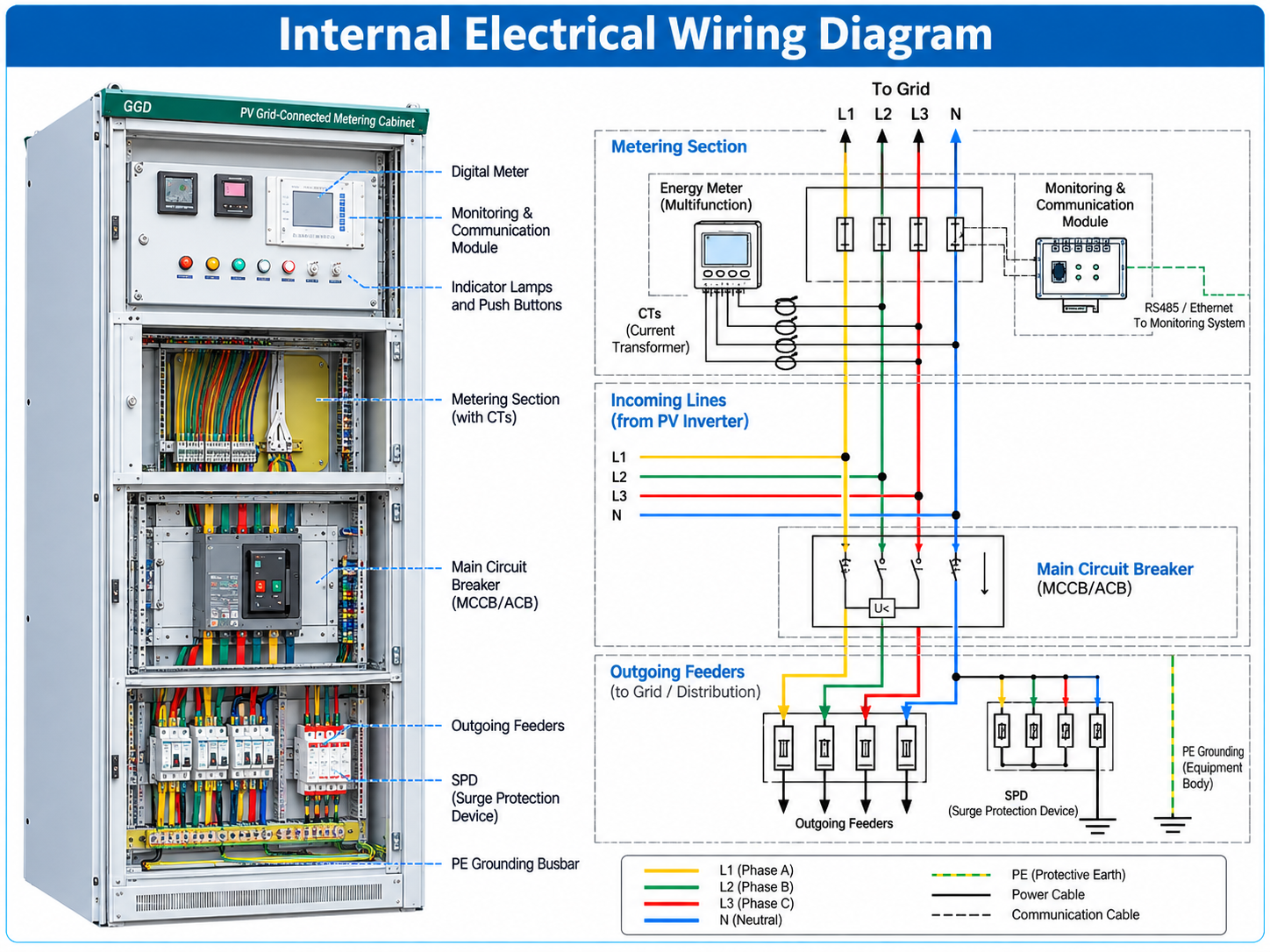
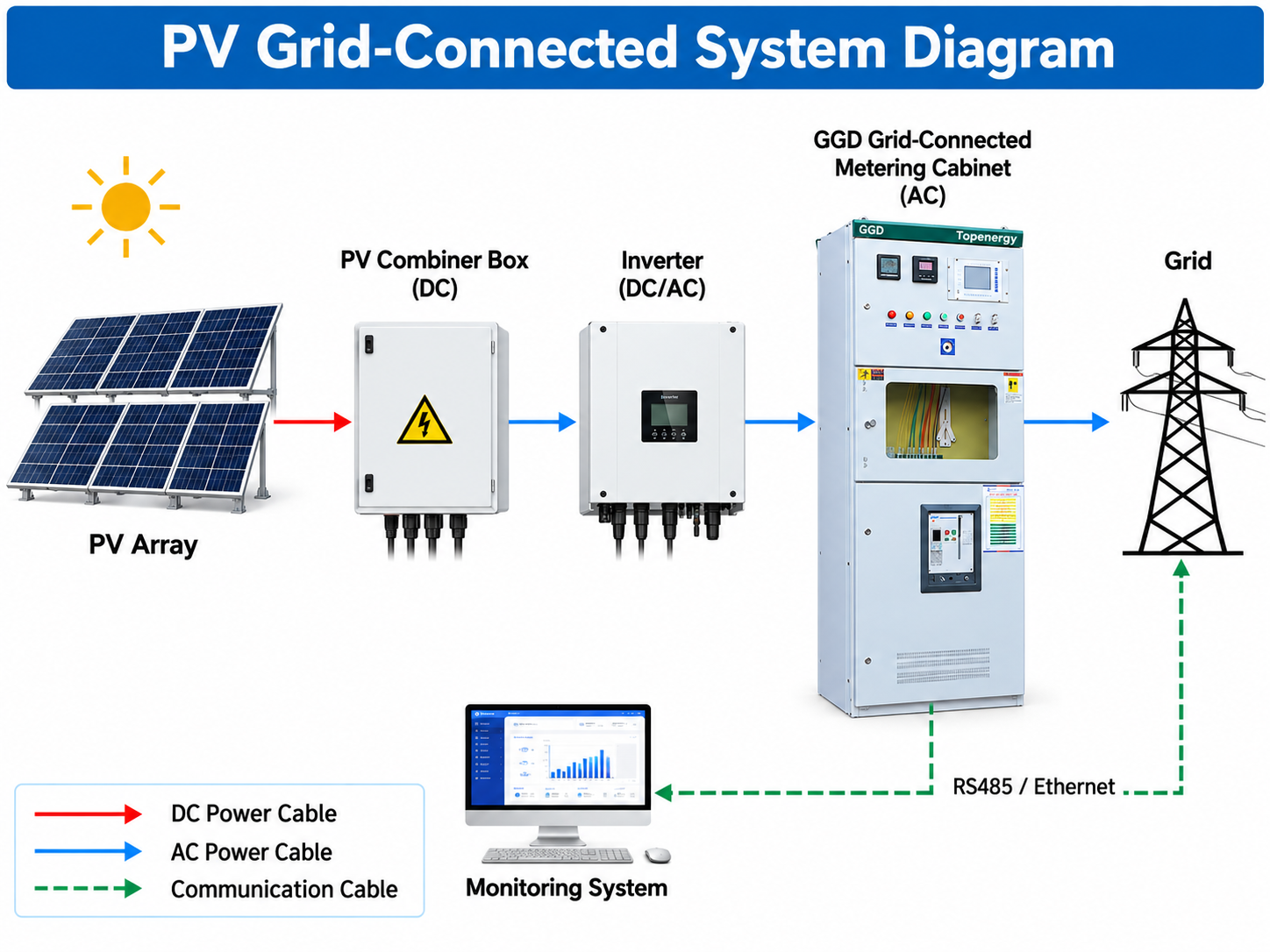
The GGD cabinet design supports a structured arrangement of electrical components and operating interfaces.
Based on the cabinet configuration, the main sections may include the following.
The upper instrument section can accommodate digital meters, monitoring equipment, indicator lamps, and operating controls.
These devices help provide visual access to the electrical parameters and operating indications defined by the project.
A designated inspection section can provide visual access to selected wiring and connection areas where an appropriate inspection window is included in the cabinet design.
Internal conductors, terminals, and connections should be arranged according to the approved electrical drawings.
The main circuit breaker section can accommodate an appropriately rated MCCB, ACB, or other specified switching device.
The final breaker selection depends on operating voltage, rated current, short-circuit conditions, switching requirements, and coordination with the connected electrical equipment.
Depending on the configuration, the cabinet may incorporate power busbars, connection terminals, current transformers, auxiliary control devices, and protective earthing arrangements.
These assemblies must be engineered and verified according to the applicable electrical and installation requirements.
A project-specific GGD cabinet configuration can provide several practical advantages:
Structured cabinet arrangement: Provides designated areas for electrical components, measuring instruments, and associated connections.
Integrated switching and protection: Accommodates appropriately selected electrical switching and protective devices.
Energy metering capability: Supports the installation of compatible electrical measuring instruments.
Maintenance-oriented design: Allows access to designated equipment sections according to the cabinet design and safety procedures.
Flexible internal configuration: Provides options for arranging electrical equipment and cabling based on the approved project specifications.
Multi-cabinet integration: Multiple cabinet sections can be arranged to support larger low-voltage distribution requirements where properly engineered.
The available features depend on the final supplied model, component selection, and approved cabinet configuration.
Commercial rooftop photovoltaic projects may require AC distribution and metering arrangements between the inverter system and the building's electrical infrastructure.
A suitably specified GGD cabinet can accommodate designated electrical distribution, measurement, and protection functions.
Factories and industrial facilities may integrate solar generation into their existing low-voltage electrical systems.
A GGD low-voltage distribution cabinet can be configured according to the electrical ratings, protection requirements, and metering needs of the industrial PV installation.
Ground-mounted solar projects require appropriate AC collection, distribution, and metering arrangements.
GGD cabinet applications should be evaluated according to their actual voltage and current ratings, installation environment, and the engineering requirements of the plant.
EPC contractors and electrical system integrators frequently work with project-specific electrical drawings, component specifications, and installation constraints.
A configurable GGD cabinet platform can support such requirements when the proposed electrical and mechanical arrangement is technically suitable.
When selecting a PV grid connection cabinet, buyers should evaluate several important factors rather than relying only on the cabinet's external appearance.
Confirm the rated operational voltage, rated current, system frequency, short-circuit requirements, and the intended incoming and outgoing circuit arrangement.
Choose circuit breakers and protective devices with ratings and functions suitable for the electrical installation.
Protection coordination and prospective fault conditions should be reviewed as part of the engineering design.
Determine whether the project requires general operational metering, more detailed power-quality measurements, or utility-approved revenue metering.
The requirements may influence the selection of meters, current transformers, voltage measurement arrangements, and communication devices.
Confirm the available installation space, cable entry requirements, ventilation requirements, ambient temperature, and environmental protection needs.
For enclosure protection, IP30 is a common reference configuration for traditional GGD cabinets. Higher enclosure protection levels, such as IP54 or IP65, may be considered for specially engineered configurations, but require confirmation of the complete assembly's design, thermal performance, and protection rating.
Depending on the destination market, relevant low-voltage assembly requirements may include IEC 61439-1 and IEC 61439-2.
Engineering drawings, verification records, factory inspection documents, and applicable compliance information should be reviewed for the actual supplied configuration.
Different solar installations require different electrical specifications.
Topenergy can discuss project-specific GGD cabinet configurations covering:
Cabinet dimensions and arrangement.
Rated electrical parameters.
Circuit breaker selection.
Metering instruments and current transformers.
Indicator lamps and auxiliary controls.
Optional monitoring and communication devices.
Cable entry and connection arrangements.
Enclosure design and protection requirements.
Multi-cabinet electrical distribution layouts.
Customization is subject to technical review, component compatibility, manufacturing capability, and applicable verification requirements.
It provides an enclosure for designated electrical distribution, switching, protection, and metering equipment within a photovoltaic system. Its exact purpose depends on the installed components and connection arrangement.
Yes, suitable GGD cabinet configurations can be considered for commercial and industrial photovoltaic installations when the electrical ratings and design meet project requirements.
A PV combiner box typically combines multiple photovoltaic string circuits on the DC side. A grid-connected metering cabinet can be configured to accommodate designated AC-side distribution, protection, and energy metering functions.
Remote monitoring may be available where compatible metering instruments, communication modules, and monitoring systems are included in the approved configuration.
IP65 may be considered as a customized enclosure design option, subject to engineering evaluation, thermal considerations, manufacturing capability, and verification of the completed cabinet.
A GGD PV Grid-Connected Metering Cabinet is an important equipment option for projects requiring organized low-voltage AC distribution, electrical protection, and energy measurement.
By specifying appropriate circuit breakers, electrical instruments, internal connections, and cabinet arrangements, project engineers can develop distribution solutions suited to the electrical requirements of different solar installations.
For EPC contractors, system integrators, and international electrical equipment buyers, accurate technical specifications and suitable cabinet configuration are essential to successful equipment selection.
Looking for a GGD PV Grid-Connected Cabinet Supplier?
Contact Topenergy to discuss your solar power distribution project, request product technical information, or submit your electrical drawings for configuration review.
Request a Quotation | Explore GGD PV Grid-Connected Cabinets | Contact Topenergy
